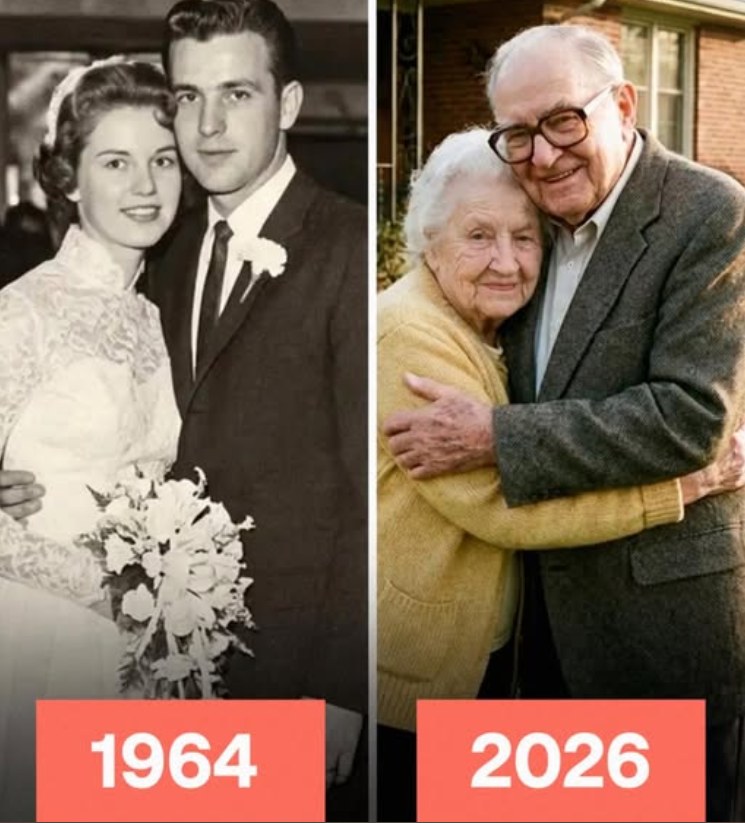
A few days later, after Gini's mother returned home, she invited me to their house.
She took out an old photo album that she had kept for years, and I slowly turned the pages, watching a childhood unfold through the photographs: a girl growing up, class photos and holiday snapshots.
Then I turned another page, and it took my breath away.
It was a photo of young Harold, standing in front of what appeared to be a boarding house. Next to him stood a teenage girl holding a newborn baby; both were squinting in the sunlight.
I knew this girl. I grew up in the same house as her.
I knew that girl.
It was my older sister, Iris. The one who left home when I was fifteen and never came back. The one my parents never spoke about until the end of their days, because reopening that wound was too painful.
"That's my mother," said Virginia, Gini's mother, softly. "She passed away 12 years ago."
The photo slipped from my hands as tears welled up in my eyes.
"Are you okay?" Virginia asked, reaching out to catch me before I collapsed.
I closed the album.
"I have to go home," I said.
"She passed away 12 years ago."
Read more on the next page >>
Harold's study was exactly as he had left it: the papers piled up, the old desk lamp, and the leather-bound diary he filled out every night before going to bed, for as long as I can remember.
I sat in his armchair and opened the book to pages dating back 65 years.
In Harold's careful writing, the truth slowly emerged, like a photograph developing in a darkroom.
He found my sister one rainy evening, near an old caravan on the outskirts of town. She was 19 years old and had a newborn baby in her arms. The man who had promised to marry her had long since disappeared.
He had found my sister one rainy evening, near an old caravan.
At the time, Harold did not recognize her. It was only later, when he noticed the small locket she always wore, the one that contained a photo of my sister and me, that he understood that the young girl he had helped was the sister my family had lost.
For three years, Harold brought her food, helped her find temporary work, and discreetly showed up whenever she needed help, never expecting anything in return. He wrote about her with the quiet concern one feels for someone on the brink of disaster.
But he also knew something else: he had already begun to court me.
Harold hadn't realized who she was.
Read more on the next page >>
Harold knew how much my parents had been affected by my sister's disappearance. He knew that if they ever found out where she was or how difficult her life had become, it would reopen wounds they had spent years trying to heal.
So Harold did what he always did. He helped discreetly.
He supported my sister and her baby from afar, making sure they had what they needed to survive, without ever revealing to anyone the burden he carried. And he continued like this until the end of his life.
I closed the newspaper and pressed it against my chest.
Harold hadn't hidden a betrayal. He had hidden a kindness so great that it had cost him a lifetime of silence.
He supported my sister and her baby.
I went back to see Gini and her mother the next day.
We sat down at their kitchen table, and I told them everything: my sister, the diary, what Harold had done and why he had kept it a secret, and what it meant for all of us now.
Gini's mother was crying. Gini remained motionless, staring at the table, before finally raising her eyes towards me, her face distorted by shock and pain.
"Virginia," I said, turning to Gini's mother, "you are my sister's daughter." Then I looked at Gini. "And that makes you my great-niece."
A silence fell in the kitchen. Then Gini got up from her chair, crossed the small space that separated us and hugged me without a word.
"You are my sister's daughter."
Read more on the next page >>
I hugged her and thought of Harold, of the weight of what he had carried alone, and of the quiet grace with which he had carried it.
My husband had not only kept a secret. He had preserved the unity of two families.
"He was really something," Gini murmured against my shoulder.
"Yes," I said, pressing my cheek against the top of his head. "He really was."
Harold kept this secret alone for 65 years so that no one would get hurt. And in the end, this secret allowed everyone to go home.