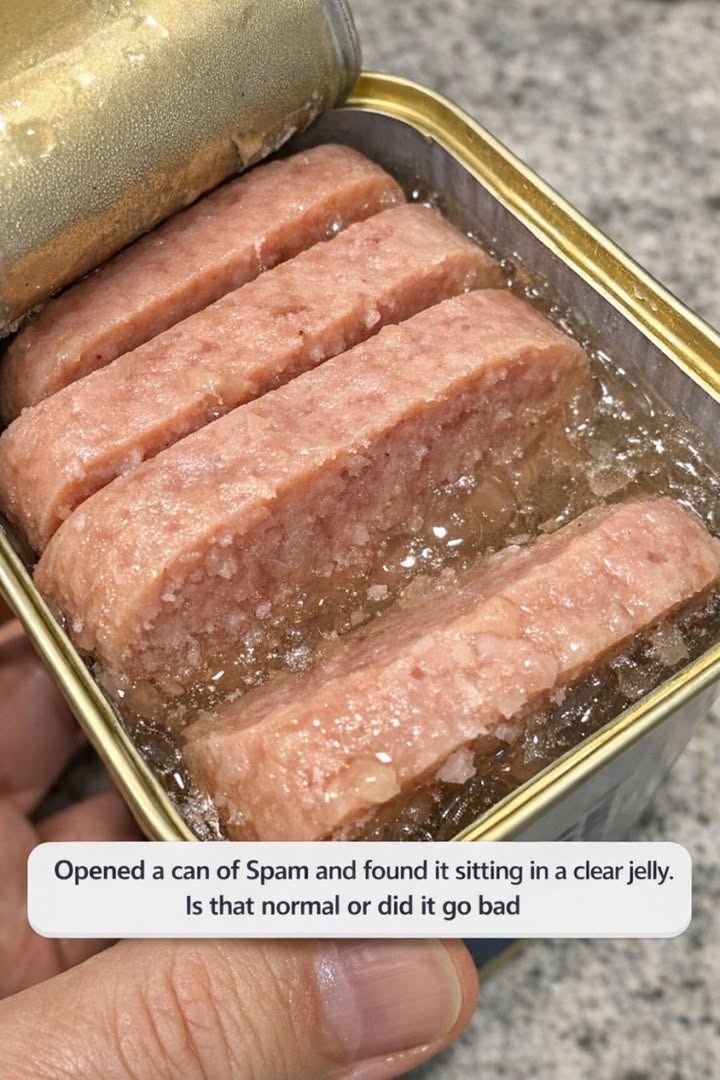
If you’ve ever opened a can of Spam for the first time, you might have been startled to find the familiar pink meat sitting in a clear, jelly-like substance. It’s an understandable moment of concern: Is this normal? Has the Spam gone bad? Should you throw it away?
Before you toss that can in the trash, let’s put your mind at ease. The presence of clear jelly in canned meats like Spam is not only common—it’s a completely normal part of the product. Here’s everything you need to know about what that jelly is, why it forms, and how to tell if your Spam is still safe to eat.
What Is the Clear Jelly on Spam, Exactly?
The clear jelly found in a can of Spam is a natural gelatin that forms during the cooking and canning process. This gelatin comes directly from the collagen in the pork and ham mixture used to make Spam.
When the meat is cooked, the collagen breaks down and dissolves into the liquid. As the can cools and is stored, this liquid gelatinizes, forming the clear jelly you see. It’s the same process that creates the rich jelly in a homemade meat stock or stew—just in a canned form.
Unlike the meat jelly you might find in a homemade broth, the jelly in Spam is typically clear and odorless. It’s a natural part of the product and actually helps keep the meat moist and flavorful during its long shelf life.
Why Does Spam Form This Natural Gelatin?
The production process for Spam is designed to create a shelf-stable product that stays fresh for extended periods. During manufacturing, the pork and ham mixture is cooked thoroughly, which causes the collagen proteins in the meat to break down. Collagen, when heated, converts into gelatin—a process well understood in culinary science.
When the can is sealed while hot and then allowed to cool, the gelatin remains liquid only until the temperature drops. As it cools, it solidifies into the jelly you see when you open the can. This natural preservation method does two important things:
It keeps the meat moist and tender
It acts as a barrier against bacteria and environmental factors
Far from being a sign of spoilage, this gelatin is actually part of what makes Spam safe to store without refrigeration until opened.
How to Tell Normal Gelatin From Signs of Spoilage
While the presence of gelatin is typically normal, there are clear signs that can indicate whether your Spam is still safe to eat. Here’s what to look for:
Normal Jelly:
Clear or slightly amber in color
No strong or unpleasant odor
Smooth, gelatinous texture
Potential Signs of Spoilage:
Jelly that is cloudy, greenish, or discolored
An off-putting, sour, or rancid smell
An unusually thick or slimy texture
The can itself is bulging, leaking, or severely dented
If you notice any of these warning signs, it’s best to err on the side of caution and discard the product. A bulging can, in particular, can indicate bacterial activity inside and should never be opened or consumed.
Visual Cues: What to Look For
When assessing your can of Spam, use your eyes first:
The Jelly:
Normal: Clear or slightly amber
Concerning: Green, dark brown, or black discoloration
The Meat Itself:
Normal: Uniform pinkish color throughout
Concerning: Gray or brown spots, unusual discoloration
If either the jelly or the meat looks off, trust your instincts and discard the can.
The Smell Test: Trust Your Nose
Your sense of smell is one of the most reliable tools for detecting spoiled food. When you first open a can of fresh Spam, the aroma should be:
Mild
Slightly salty
Characteristic of cooked pork products
If you detect any sour, rancid, or otherwise unpleasant odors, this is a strong indicator that the Spam is no longer safe to eat. Bacterial growth often produces foul-smelling compounds, and your nose will usually pick up on them long before other signs become visible.
Expiration Dates, Storage, and Can Damage
Check the Expiration Date
Always look at the date on your can before opening. While canned goods often remain safe beyond their labeled date, it’s a useful indicator of peak quality.
Store Properly
Keep unopened Spam in a cool, dry place. Heat and humidity can accelerate spoilage and shorten shelf life.
Inspect the Can
Before opening, examine the can for:
Dents (especially deep or sharp ones)
Rust
Leaks or seepage
Continued on the next page