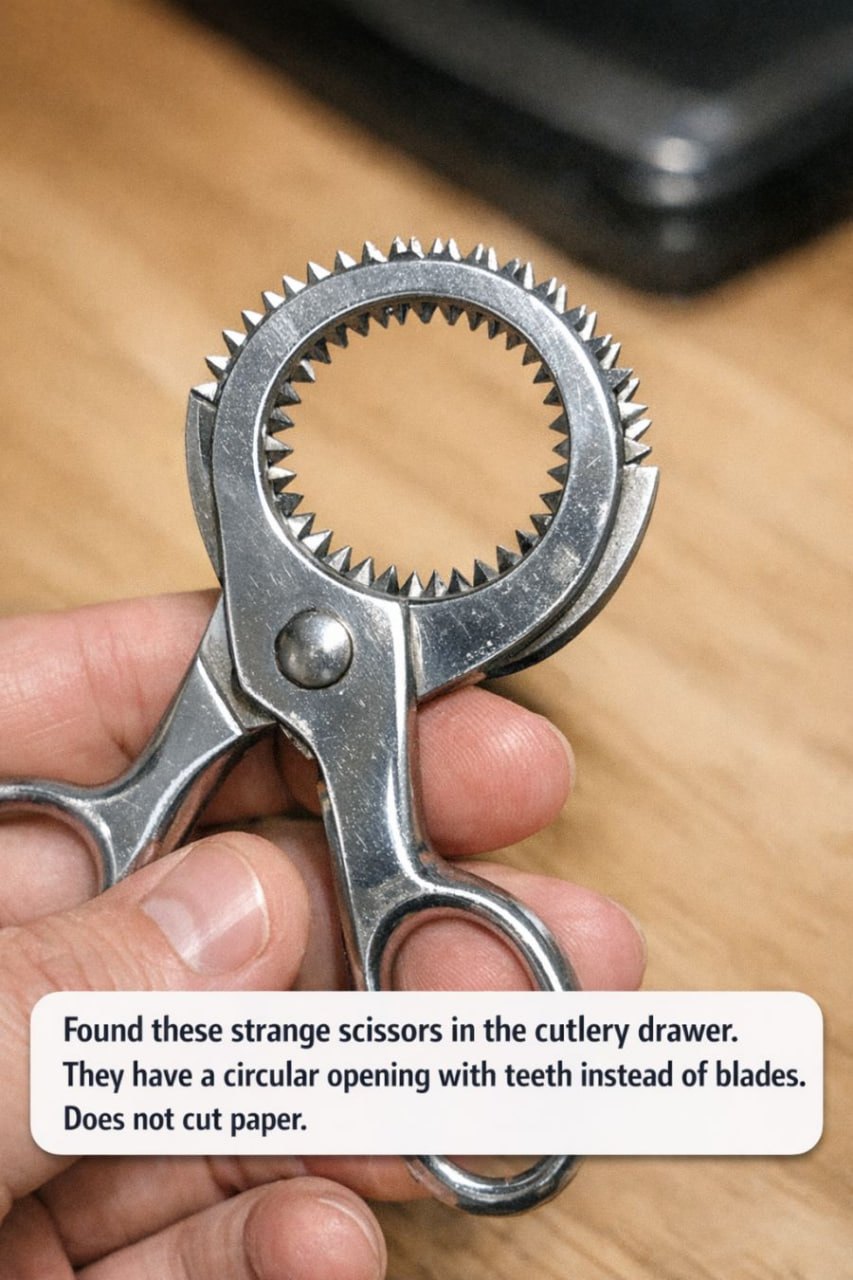
While rummaging through your cutlery drawer, you might come across a peculiar tool that looks like scissors but has a circular opening lined with small teeth instead of sharp blades. At first glance, it can be confusing—especially when you discover that it doesn’t perform the usual function of scissors, such as cutting paper.
This unusual kitchen gadget is more common than you might think. It is actually an egg topper, a tool designed to neatly remove the top of a soft-boiled egg.
1. Why These “Scissors” Don’t Cut Paper
These scissors-like tools don’t cut paper because they are not designed with traditional cutting blades. Instead, they have a circular opening with small serrated teeth.
Unlike regular scissors that slice through material, these teeth are meant to grip and crack, not cut. The circular opening—usually about 2.5 to 5 cm (1–2 inches) wide—fits the top of an egg.
Because the teeth are not sharp enough to slice materials, the tool cannot cut paper or other thin items.
2. The Real Purpose: A Soft-Boiled Egg Topper
The tool is designed to remove the top of a soft-boiled egg cleanly.
Soft-boiled eggs are commonly served in egg cups, especially in many European breakfasts. An egg topper allows you to open the egg neatly without breaking the shell into messy fragments.
This creates a smooth opening so you can eat the egg with a spoon or dip toast into the yolk.
3. How the Circular, Toothed Opening Works
The mechanism is simple.
-
Place the circular opening over the top of the egg.
-
Gently squeeze the handles together.
-
The serrated teeth press evenly around the shell.
-
This pressure creates a clean circular crack.
Because the pressure is distributed evenly, the shell breaks neatly instead of shattering.
4. How to Use an Egg Topper
Using the tool is straightforward:
-
Place the egg in an egg cup so it stays steady.
-
Position the topper over the top of the egg.
-
Gently squeeze the handles.
-
Lift the topper away once the shell cracks.
-
Remove the top of the shell with your fingers or a small knife.
You will be left with a clean opening for eating.
5. Soft-Boiled vs. Hard-Boiled Eggs
Egg toppers work best with soft-boiled eggs, which have a runny yolk and delicate structure. The neat opening makes them easier to eat.
Hard-boiled eggs are usually peeled entirely, so an egg topper is less useful for them.
6. Common Designs
Egg toppers come in several designs:
-
Scissor-style toppers with serrated circular openings
-
Spring-loaded models
-
Bell-shaped toppers that crack the shell using a dropping weight
Some versions also adjust to fit different egg sizes.
7. Signs It’s an Egg Topper
You can recognize an egg topper by several features:
-
A circular opening with teeth
-
Handles similar to scissors
-
An opening about the size of an egg
-
The inability to cut paper or other materials
These clues point to its purpose: cracking eggshells cleanly.
8. Safety and Cleaning
Although the teeth are not sharp, they can pinch skin if handled carelessly.
Cleaning is simple:
-
Wash with warm soapy water, or
-
Place it in the dishwasher if it is stainless steel.
Dry it well to prevent rust.
9. Other Possible Uses
Some people use egg toppers creatively, such as making decorative cuts in soft foods like tomatoes.
However, avoid using it on:
-
Hard shells
-
Nuts
-
Thick-skinned fruits
Using excessive force may damage the tool.
10. Why It Ends Up in the Cutlery Drawer
Egg toppers are small and resemble scissors, so they are often stored with other utensils. Since most households don’t use them daily, they tend to sit unnoticed in a cutlery drawer until rediscovered.
11. When to Replace or Skip One
You may want to replace an egg topper if:
-
The teeth become bent or dull
-
It stops creating a clean crack
If you rarely eat soft-boiled eggs, you may not need one at all. A knife or spoon can open an egg with a bit of care.
✅ In short: that strange scissor-like tool in your drawer is most likely an egg topper, designed to neatly crack the top off a soft-boiled egg.