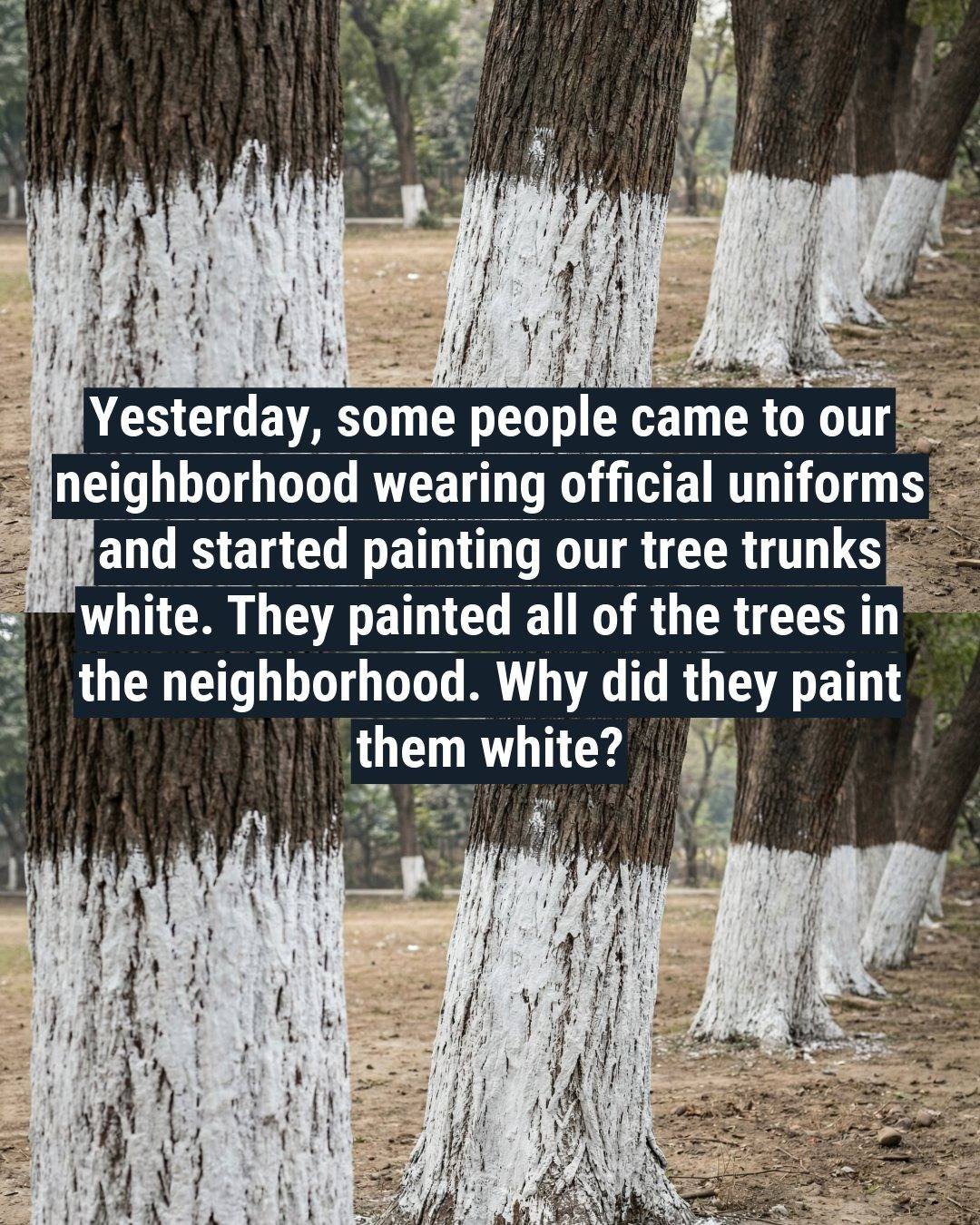
For years, I’d pass them on country roads and in orchards—trees standing tall in winter’s bareness, their trunks wrapped in a soft band of white, like they’d been dipped in fresh snow.
I’d wonder: What does it mean? Is it a warning? A marker? A message meant only for those who know how to read it?
Turns out, it’s none of those things.
It’s something far more tender.
It’s care.
Not a Code—A Comfort
You may have seen other painted marks on trees—orange for removal, purple for “private property.” Those are signals—practical, administrative.
But white?
White is different.
White is not for humans.
It’s for the tree.
In winter, when the sun hangs low and bright against a pale sky, something quiet and dangerous can happen: sunscald.
Here’s how it unfolds:
During the day, the sun’s rays warm the dark bark, causing it to expand—just slightly, just enough.
Then night falls. The temperature plummets.
The bark cools—too quickly. It contracts.
And in that sudden shift, it can split. Crack. Peel away.